Shanghai Academy of Social Sciences Releases Annual Report on World Cities
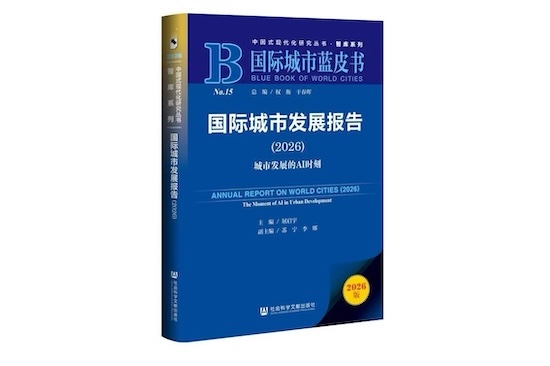
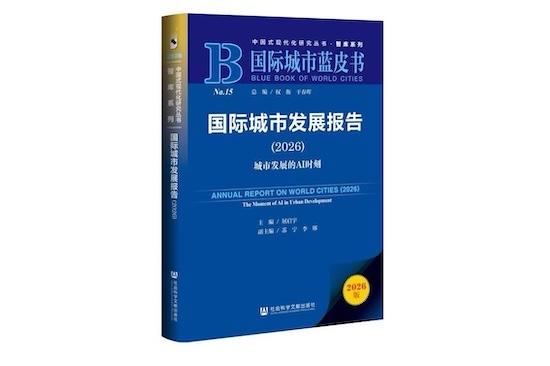
Recently, the “Blue Book of World Cities: 2026 Annual Report,” edited by Tu Qiyu, Deputy Director of the Institute of Urban and Demographic Studies at the Shanghai Academy of Social Sciences, was released. The report takes "The Moment of AI in Urban Development" as its annual theme, focusing on the explorations, practices, and strategic planning of international cities in areas such as AI empowerment, economic vitality stimulation, and social momentum re-engineering.
The report points out that AI (Artificial Intelligence) is profoundly reshaping the operating methods and growth trajectories of international cities, bringing about fundamental transformations in urban development and governance. AI cities take inclusive productivity as their primary goal, operate under the hard constraints of green computing power, gain international influence through rule-setting, and rely on lifelong, competency-based learning as a long-term foundation.
At the same time, AI will also introduce new challenges to cities, such as the dual constraints of computing power and energy, issues of data governance and public trust, and risks associated with platform dependency and intelligent system failures. International cities must therefore explore a new balanced development path between human-centered governance and algorithm-driven decision-making.
Published in Social Sciences Weekly, Issue 1998, Page 4, April 23